
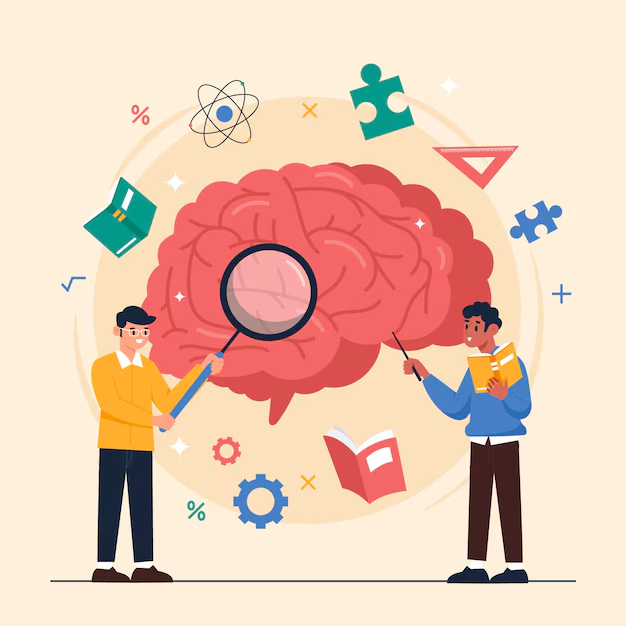
1. Introduction of Brain and behavior of It.
1.1 The Intersection of Neuroscience and Human Behavior
- Brain and behavior neuroscience as the study of the Brain and behavior nervous system, focusing on how the brain influences thoughts, emotions, and actions.
- Discuss the historical evolution of neuroscience, from ancient times to modern interdisciplinary approaches combining psychology, biology, and technology.
- Highlight the significance of studying behavior through a neuroscientific lens in diverse fields such as mental health, education, and artificial intelligence.
1.2 Why Understanding Behavior Matters
- Explain how human behavior impacts personal growth, relationships, and societal dynamics.
- Explore neuroscience as a bridge between biological processes and observable actions.
- Introduce the key themes of the blog: emotional regulation, decision-making, mental health, and future implications of neuroscience research.
2. Foundations of Neuroscience in Behavior
2.1 Brain Structure and Its Functions
- Break down major brain regions:
- Cerebrum: Role in higher-order functions like reasoning and voluntary movement.
- Limbic System: Emotional processing and memory.
- Cerebellum and Brainstem: Coordination, motor control, and basic life functions.
- How each region contributes to specific behavioral traits like empathy, aggression, and creativity.
2.2 Neurons: The Building Blocks of Behavior
- Discuss the structure of neurons (dendrites, axons, synapses).
- Explain the significance of neural networks in shaping learning and behavior.
- Highlight neuroplasticity—the brain’s ability to reorganize itself in response to experiences—and its behavioral implications.
2.3 Neurotransmitters and Behavioral Responses
- Overview of neurotransmitters: dopamine (reward system), serotonin (mood), and GABA (inhibition).
- Illustrate their influence with real-world examples:
- Low serotonin levels leading to depression.
- Excessive dopamine activity in addiction.
3. Neuroscientific Approaches to Behavior Analysis
3.1 Neuroimaging Techniques
- Define and compare tools like fMRI (functional brain mapping), PET scans (metabolic activity), and EEG (real-time electrical activity).
- Real-world applications: diagnosing mental disorders, understanding cognitive functions, and studying empathy.
3.2 Advances in Neurogenetics
- Discuss the relationship between genes and behavior.
- Explain how genetic predispositions and environmental factors interact to shape personality and habits.
- Introduce epigenetics and its role in modifying gene expression in response to experiences.
3.3 Neuromodulation and Behavioral Changes
- Overview of Transcranial Magnetic Stimulation (TMS) and Deep Brain Stimulation (DBS).
- Applications in treating depression, OCD, and Parkinson’s disease.
- Ethical concerns: long-term impacts and potential misuse.
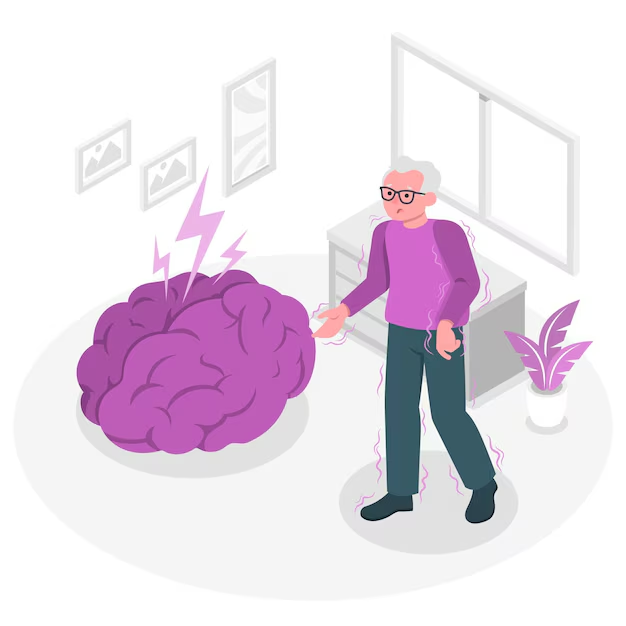
4. Applications of Neuroscience in Understanding Behavior
4.1 Developmental Neuroscience
- Brain development across the lifespan:
- Critical periods in childhood for learning and emotional bonding.
- Neural pruning and its role in shaping adulthood behavior.
- How childhood trauma or neglect impacts adult behavioral patterns.
4.2 Emotional Regulation and Decision-Making
- Explore the interplay between the amygdala (fear and emotion) and the prefrontal cortex (logic and control).
- Neuroscience behind impulsivity and self-control in decision-making.
- Impact of emotional dysregulation in mental disorders like anxiety.
4.3 Social Neuroscience
- Neural mechanisms of social behaviors: trust, empathy, and cooperation.
- How oxytocin influences bonding and social interactions.
- Effects of prolonged isolation on brain function and behavior.
5. Neuroscience in Mental Health and Disorders
5.1 The Neuroscience of Anxiety and Depression
- Discuss brain regions (hippocampus, amygdala) and neurotransmitter imbalances in mood disorders.
- The role of cognitive-behavioral therapy (CBT) in retraining neural pathways.
- Explore medication and its effects on brain chemistry.
5.2 Behavioral Neuroscience of Addiction
- Neural basis of reward-seeking behavior and compulsions.
- How substance abuse alters dopamine pathways.
- Innovative treatments like neurofeedback.
5.3 Neurodiversity and Behavioral Differences
- Scientific understanding of autism, ADHD, and dyslexia.
- How neurodivergence reshapes perceptions of “normal” behavior.
- Advocacy for neurodiversity and inclusive approaches.
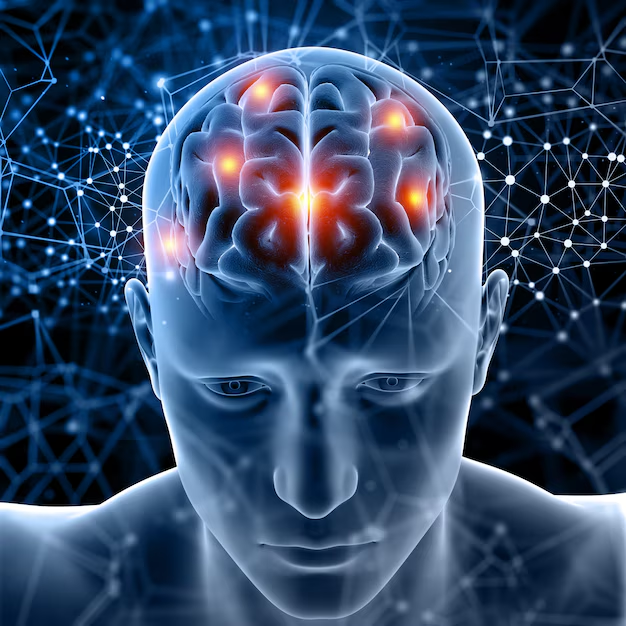
6. Behavioral Insights from Neuroscience Research
6.1 Habits and Neural Pathways
- Mechanisms of habit formation in the basal ganglia.
- Strategies for breaking bad habits and forming new ones using neuroscience.
6.2 Learning and Memory
- Differences between short-term and long-term memory storage.
- Neural role in forgetting and memory consolidation.
- Behavioral techniques to enhance learning, backed by neuroscience.
6.3 Stress and Resilience
- Chronic stress and its impact on brain structure (e.g., reduced hippocampal volume).
- Factors contributing to resilience, such as neural flexibility.
- Practical ways to build mental strength using neuroscientific principles.
7. Future Directions in Neuroscience and Behavior
7.1 Artificial Intelligence and Brain Research
- How neuroscience inspires AI development, like artificial neural networks.
- Potential for AI to predict human behavior.
7.2 Brain-Computer Interfaces
- Explain how BCIs work in real-time communication with the brain.
- Implications for individuals with disabilities and future societal impacts.
7.3 Ethical and Societal Implications
- Challenges in neuromarketing and neuroprivacy.
- Debates around enhancing cognitive functions through neuroscience.
8. Conclusion
In summary, neuroscience serves as both a mirror and a guide—reflecting the complexities of human behavior while illuminating pathways for growth, healing, and innovation. Its insights bridge the gap between biology and behavior, empowering individuals to take charge of their mental and emotional well-being and enabling communities to create supportive, inclusive environments.
As we continue to explore the depths of the human brain, we must embrace the responsibility that comes with such knowledge. By prioritizing ethical applications and fostering a spirit of curiosity and collaboration, neuroscience holds the promise of unlocking new potentials within ourselves and our societies. In this quest to understand behavior, the journey itself is as transformative as the destination—a testament to the power of science to illuminate the mysteries of the human experience.
How Exercise Can Improve Mental Health: 5 ways physical activity changes your brain
Introduction: The Mind-Body Symphony Everything feels just a bit too much. Yet, in the midst of all this chaos, you decide—almost on a whim—to change into your workout gear and step outside for a simple 20-minute walk. As your feet begin to rhythmically hit the pavement and your breath syncs with your pace, something almost…
Psychology of laughter for stress : 6 Reasons you should laugh more
Introduction Picture this: You’re scrolling through Psychology of laughter for stress your social media feed after a long, exhausting day, when suddenly a hilarious meme pops up—something so unexpectedly funny that you can’t help but burst into laughter. It’s spontaneous, uncontrollable, and incredibly satisfying. Or maybe you’re cozied up on the couch watching a stand-up…
How to Master Emotional Self-Care: A Comprehensive Guide to Nurturing Your Mental Health
Introduction In the fast-paced world we live in today, where the demands of work, relationships, and personal aspirations How to practice emotional self-care often seem to be in constant competition for our attention, it’s all too easy for our emotional well-being to take a backseat. However, neglecting our mental health can have severe consequences, leading…
6 Simple Steps to Improve Your Decision-Making: How to Reduce Cognitive Biases
Decision-making is an vital a part How to Reduce Cognitive Biases of both our private and expert lives. Whether it’s deciding on what to have for dinner, making enterprise choices, or deciding on a course of action in the course of a crisis, the decisions we make shape our lives in great methods. However, the…
Impact of Social Media on Mental Health: 7 Powerful Ways It Shapes Your Mood
Introduction In today’s digital era, social media has become an integral part of our lives, seamlessly weaving itself into the fabric of our daily interactions. Platforms like Facebook, Instagram, Twitter, TikTok, and Snapchat have revolutionized the way we connect, communicate, and consume information, creating a global village where distance and time seem to fade away.…
How to Deal with Loneliness Effectively: 5 Strategies to Escape Crushing Loneliness
Introduction In today’s fast-paced and digital world, loneliness has become a common experience for many people. Despite being surrounded by friends, family, or colleagues, individuals often feel isolated and disconnected from those around them. Understanding how to deal with loneliness effectively is crucial for maintaining mental and emotional well-being, as it is an experience that…
Brain and behavior.Brain and behavior.Brain and behavior.Brain and behavior.Brain and behavior.Brain and behavior.Brain and behavior.Brain and behavior.Brain and behavior.Brain and behavior.Brain and behavior.Brain and behavior.Brain and behavior.Brain and behavior.Brain and behavior.Brain and behavior.Brain and behavior.Brain and behavior